

Some Elements of the Historical Context
Education is the driving force behind popular movements in Latin America. That is why our approach to teaching and learning is a political and epistemological construction of our own. It was forged on Latin American soil in our history of struggle against colonization, the “civilizing process,” and the inequalities arising from the contradictions of incipient capitalism on our continent.
In the first half of the nineteenth century, while Latin America was experiencing independence movements, Simón Rodríguez (1769–1854), a Venezuelan thinker and teacher of Simón Bolívar, said something that would become a motto for Latin American educators, especially Venezuelans: “We must either invent or err.” Through this statement, Rodríguez expressed his views on education and the importance of creating institutional mechanisms and educational methods adapted to reality that could address the problems Latin America inherited from its colonial past.
In his writings, Simón Rodríguez proposed an educational system that would integrate historically marginalized social classes (Indigenous peoples, criollos, and rural workers) into the social and political fabric of the nascent republics. He believed it was essential to incorporate manual labor, technical training, and critical thinking into the educational process. Thus, he conceived of the school not as a space for forming submissive citizens who reproduce the colonial order, but as a setting for integrating the forgotten and as a laboratory for a new, sovereign society.
More than a century later, in the 1960s, Brazilian educator Paulo Freire (1921–1997) reshaped the discourse and practice of popular education. He adapted and systematized his approach to the context of societies affected by the growth of industrial capital, the subjugation of Latin American countries, and the emergence of dictatorships in the region. He based his pedagogical perspective on questioning what he called “banking education”: a system in which students are seen as passive recipients of information, and knowledge is shared as an act of charity by those who consider themselves the sole possessors of knowledge with those they deem ignorant. According to Freire, this mechanism perpetuates the relationship of domination between the oppressors and the oppressed.
For Freire, education must be a tool of liberation. Literacy is an act of conscientization through dialogue and words drawn from the learners’ environment. It is the act of “reading the world.” When the oppressed subject understands and ceases to accept their historical situation as an unalterable destiny by reading the world before the word, they come to see it as a reality capable of transformation.
The roots of popular education in the region lie at the intersection of Simón Rodríguez and Paulo Freire: the protagonist role of oppressed groups in their own development; the view of pedagogy as a liberating practice that fosters sovereignty; and the vision of comprehensive liberation to end oppression and decolonize consciousness and territory.
In 1999, under the leadership of Commander Hugo Chávez (1954–2013), a Venezuelan soldier and revolutionary, the Bolivarian Revolution gained strength. Alongside this growth, the concept of popular education ceased to be a mere theory and became a government project. The Chavista conception of education is principally founded on three great figures of Venezuelan history: Simón Rodríguez’ pedagogical formulations, Simón Bolívar’s geopolitical vision and sovereign project, and Ezequiel Zamora’s preaching of equality. This triad of thought is known today as the “Tree of Three Roots” (El Libro Azul, Chávez Frías, 1992).
Within the communal proposal of Popular Education, the classroom is integrated into the participants’ territorial reality. Thus, members of the commune—including children, youth, and adults—develop the practical skills necessary to organize the community, coordinate local production, establish self-government, manage the territory collectively, and address everyday issues beyond the bureaucratic constraints of the bourgeois state. They do so through assemblies, communal councils, and communes.

To bring this concept of popular education to life in the territories and subvert the bureaucracy of the bourgeois state and institutions inherited from the Fourth Republic, the Bolivarian government established the Great Educational Missions in the early 2000s. Through Mission Robinson, Mission Ribas, and Mission Sucre, the Chavista project transformed literacy, secondary education, and universities into direct tools for building popular power.
Mission Robinson, named in homage to Simón Rodríguez’s pseudonym, was established in 2003 with the goal of teaching the entire country’s population to read and write. Using the Cuban pedagogical method “Yo, sí puedo” [Yes, I can], the mission departed from the traditional school model and organized the learning process in spaces within communities, such as neighborhood associations, sports courts, neighbors’ porches, and even beneath mango trees. Mission Robinson taught more than 1.5 million Venezuelans to read and write, leading UNESCO to declare Venezuela an Illiteracy-Free Territory in 2005. The mission restored dignity and voice to oppressed people by doing so.
Mission Ribas continues the emancipatory process through education by assuming responsibility for providing high school education to youth and adults. Named after independence hero José Félix Ribas, Mission Ribas integrates formal education with technical training and productive work within communities. In Mission Ribas, students learn mathematics, history, and geography through practical applications oriented toward solving problems in the community. They participate in the construction of popular housing and the creation of cooperatives and Social Property Enterprises. In other words, Mission Ribas not only produces high school graduates, but also fosters individuals who are capable of managing the communes.
To break the elitist and Eurocentric nature of Venezuelan university education, Mission Sucre was established. Through the municipalization of education, Mission Sucre brings classrooms to rural and peripheral areas via University Villages. Beyond democratizing access to academic degrees, the mission transforms the logic of knowledge production through socio-integrative projects. These projects transform scientific research from an abstract document with purely academic purposes into a concrete intervention in the territory, whether in environmental sanitation, socioproductive mapping, or the legal strengthening of communal councils.
Bolivarian education is consolidated precisely through the continuous articulation of these three missions. The project’s goal is clear: teaching people to read and write, as well as training and graduating them, is not an end in itself, but rather the indispensable means by which the communal subject can fully assume self-government of their territory.
Bolivarian School Maestra Isabel González
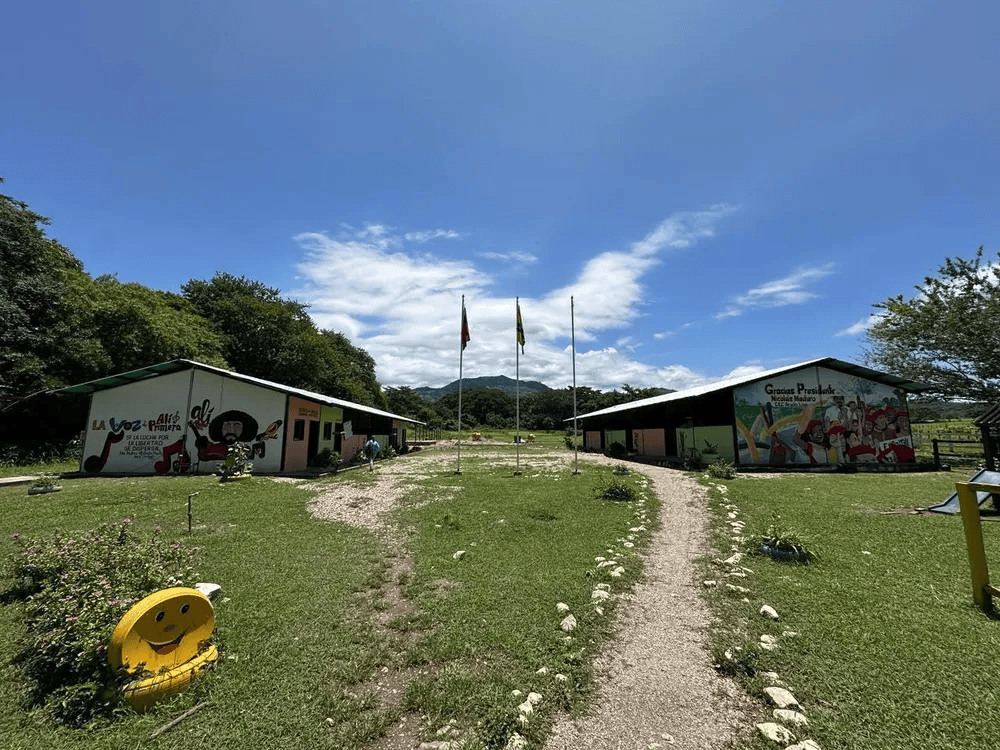
The Maestra Isabel González Bolivarian School is a paradigmatic example of popular education in Venezuela. There, educational practice transcends traditional classrooms to link directly with social struggles. In the words of its teachers: “The commune is the great school.” The school is located in the El Maizal Commune, a model for communal projects in the country. The commune is in the Simón Planas municipality in Venezuela’s Lara state.
Over the course of five years, this educational project has grown, offering hope and knowledge to those who build it and to those who recognize the importance of transforming the country’s educational system. Born from the concrete needs of the commune, it serves as a model for social and political transformation in the territory.
In the El Maizal Commune, where Direct Communal Social Property Enterprises (EPSDC) operate under the Communal Economy Law, workers confirmed that their children were attending traditional schools that did not align with the communal vision. To bridge this gap, the community decided to establish its own school. They began educational activities as an educational nucleus, despite physical limitations and provisional links to another school.
Thanks to the exchange of experiences between the El Maizal Commune and the Landless Rural Workers’ Movement (MST) of Brazil, that determination had solid foundations. The Rural Education project taught a valuable lesson: education is a tool of political emancipation, identity, and social transformation, not merely a mechanism of academic instruction. Just as the Landless in Brazil understood that a school must belong to the countryside, recognizing the importance of belonging to a project of territorial rootedness and the significance of culture to the economy and interests of the people, the commune members learned that the school must belong to the commune. In other words, the school had to educate based on the territory’s objective and historical reality in order to foster a collective identity.
The principle of “learning by doing,” coined by Simón Rodríguez, ended up being a guiding beacon in the process. Until that moment, no one in the country had experience with communal education. For this reason, teachers and communal leaders came to understand the magnitude and political nature of the educational process alongside the boys and girls. The immediate objective was to establish an educational space based on the principles of popular education for children, on an experimental basis, with the intention of replicating the program in other communities throughout the country. Although the idea was in its infancy, its potential impact was recognized.
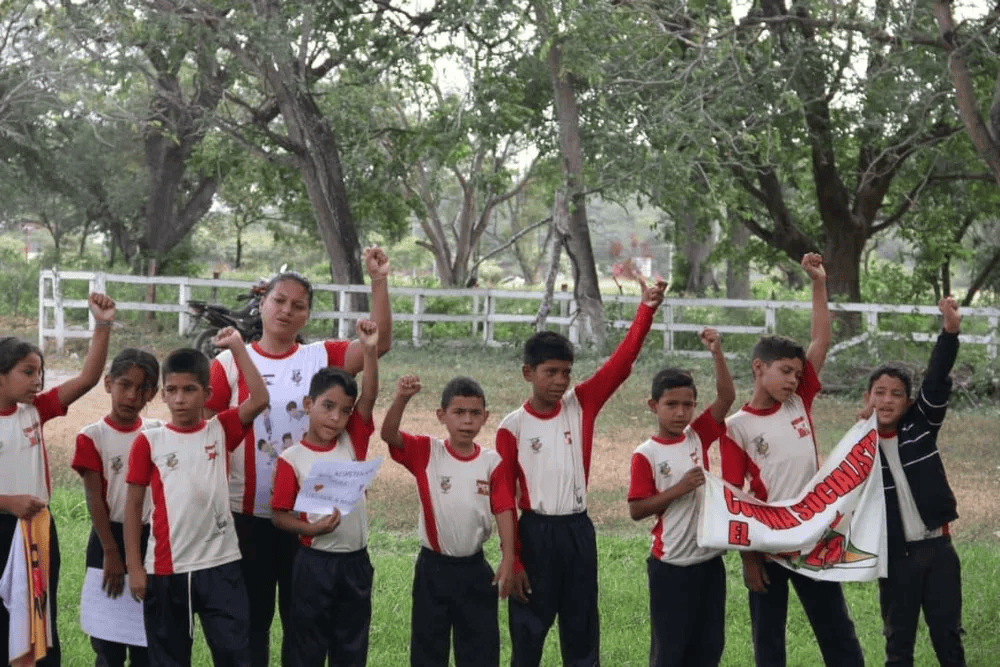
In addition to the central objective, the following pedagogical and communal principles were established as the foundation of this project:
Collective work: It transforms work into educational value by integrating boys and girls into the communal productive cycle early on. This allows them to understand the social relations of production for their future communal activity.
Co-responsibility: It assumes communal education to be a political line and an organic project of the entire commune. This breaks with the isolated and bureaucratic model that is restricted solely to schools, families, and the managing state.
Permanent formation: Recognizes that education is a political act and that teaching cadres are developed in the community, necessitating an ongoing program that connects communal practices with critical theoretical concepts.
Feminist pedagogy: It affirms that there can be no socialism without feminism within the Bolivarian and Chavista movements. It posits that mutual care and equality are the fundamental practices for establishing new human relationships.
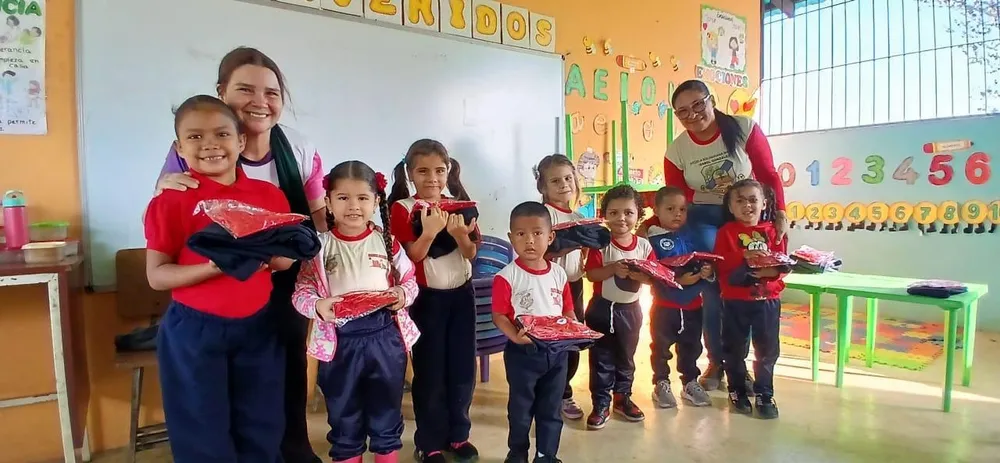
This institution has always maintained strong bonds with its grassroots base and its own history. For example, the decision to name the educational unit was made through an assembly process involving leaders and the community. Paying homage to Maestra Isabel González—daughter of this land, rural educator, tireless worker of the Bolivarian Revolution, and deeply communal soul—demonstrates respect for the people of this territory and those who have fought for life. This is an exercise worthy of integrality, as well as humanist and feminist recognition. Isabel González is the namesake of this school, and her legacy lives on in the memories of the community’s children.
As previously mentioned, this experience emerged from the Bolivarian Revolution. It was nurtured by the initiatives promoted by Commander Hugo Chávez in the early years of the Revolution and formalized in the Bolivarian Curriculum in 2007. This curriculum represents the foundation of a liberating education in Venezuela. Consequently, this school adopts the sociocritical character and the four pillars of learning: 1) learning to coexist and participate (innovation and transformation), 2) learning to value (identity and sovereignty), 3) learning to reflect (critical thinking), and 4) structured subsystems ranging from initial and primary education to secondary education, Bolivarian high schools, education for youth and adults, and intercultural bilingual education.
For the Maestra Isabel González Bolivarian School, adopting the Bolivarian Curriculum signifies a dedication to Chávez and his vision of comprehensive change. Currently, the institution has 107 students, from the initial education level through the fourth year of high school (67 in the initial and primary levels and 40 in the secondary level). The secondary school is currently an extension of Luisa Cáceres de Arismendi High School and belongs to the El Maizal Commune territory. Looking ahead to the new school year, enrollment is expected to increase by 30 to 40 percent because the school’s physical facilities are being expanded thanks to communal management and the support of the Bolivarian government.
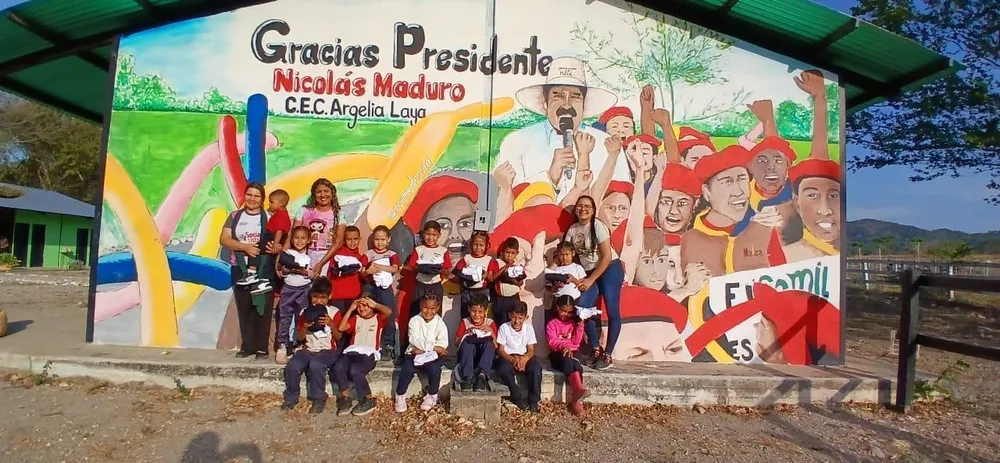
Initially, the school operated out of a house where different grade levels coexisted in a physically limited space. On October 20, 2022, however, in celebration of the tenth anniversary of the “Golpe de Timón,” President Nicolás Maduro and First Lady Cilia Flores visited the El Maizal Commune. During the meeting, the students presented the Argelia Laya Educational Complex project to the president in a fluid dialogue. The complex would house the elementary and high schools. The proposal was immediately approved and implemented under popular management. Currently, the complex is expanding due to growing demand. This expansion is considered a determining factor in the students’ sense of belonging to their educational project because they have witnessed the growth of the work and feel directly responsible for it.
Popular Education as a Methodological Root
A countryside perspective reclaims the symbolism of roots and care, integrating the legacy of emancipatory education into pedagogical practice. Within Paulo Freire’s framework, the Bolivarian School anchors the teaching of history in ongoing dialogue and critical thinking. This approach moves beyond rote memorization, teaching students by highlighting historical struggles and resistance.
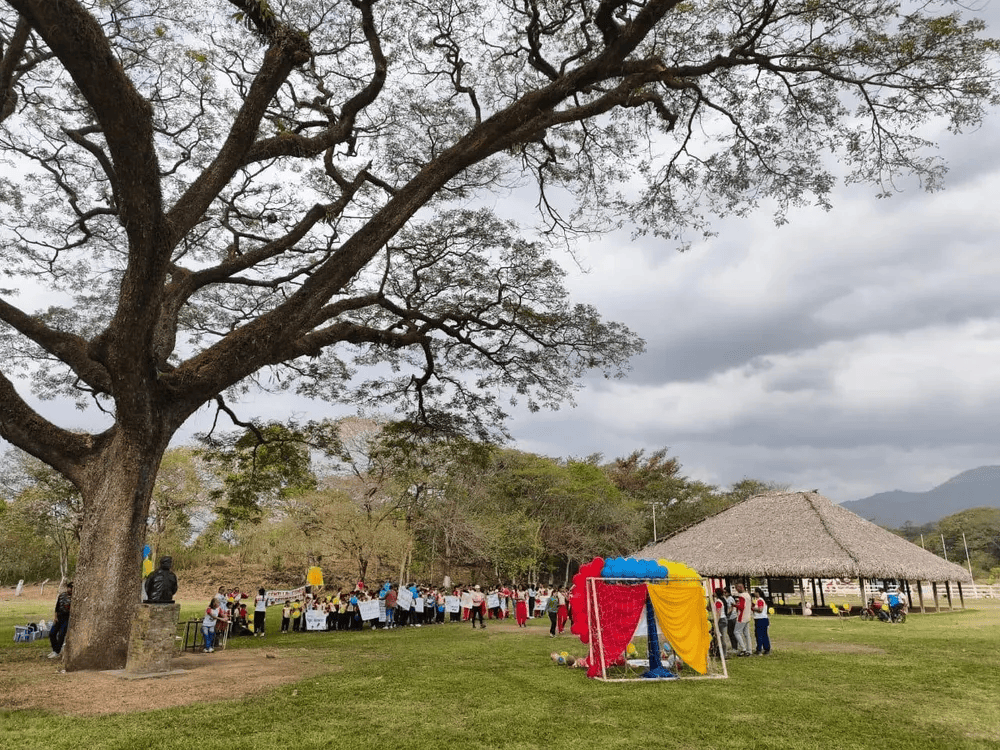
From Simón Rodríguez, a Venezuelan thinker, we reclaim the importance of Latin culture and the acquisition of technical knowledge, as well as the stimulation of curiosity. “Teach children to be inquisitive so that they become accustomed to obeying reason and not authority or custom.”
With the Guerrilla Teacher, Argelia Laya reclaims the values of emancipation, equality, and fighting prejudices based on gender, race, and ethnicity. A key figure in developing a feminist pedagogy, her legacy informs the connection between communal education and communal feminism, a central tenet of the Communal Union. The debate asserts that overcoming structural oppression must begin in childhood and be rooted in the daily interactions among students, educators, and families, not just in theory. Thus, the challenge for the coming period is to consolidate a curricular proposal on communal feminism spanning from initial education through high school, with a focus on three axes:
Valuing care: Understanding love and care as collective constructions
Valuing women’s leadership: Recognizing the role of women leaders in the communal development of the territory through political action.
Eradicate violence in all its forms: Educating boys and girls within a framework of respect, recognizing each other as equals who deserve care.
In conclusion, the Bolivarian School Maestra Isabel González has shown that schooling can be done differently by linking popular education, which awakens critical consciousness; communal construction, which builds power from the ground up; and communal feminism, which challenges gender oppression and prioritizes life. Thus, this project is consolidated as a living space of resistance and hope for a more just, egalitarian, and emancipatory society.
References:
CHÁVEZ FRÍAS, Hugo. El Libro Azul. Caracas: Ministerio del Poder Popular para la Comunicación y la Información, 2007.
FREIRE, Paulo. Educação como prática da liberdade [Educación como práctica de libertad] . Rio de Janeiro: Paz e Terra, 1967.
FREIRE, Paulo. Pedagogia do oprimido [Pedagogía del oprimido]. 17. ed. Rio de Janeiro: Paz e Terra, 1987.
GONZÁLEZ, Jorge. La educación popular y el impacto de las Misiones Sociales en Venezuela. Caracas: Editorial El Perro y la Rana, 2011.
HARNECKER, Marta. El Ecuador de la Revolución Bolivariana: un modelo de Poder Popular. Caracas: Centro Internacional Miranda, 2007.
RODRÍGUEZ, Simón. Inventamos o erramos. Caracas: Monte Ávila Editores / Biblioteca Básica Temática, 2006.
RODRÍGUEZ, Simón. Obras completas. Caracas: Universidad Nacional Experimental Simón Rodríguez, 2001. 2 v.
UNESCO. Declaración de Venezuela como Territorio Libre de Analfabetismo. París: Organización de las Naciones Unidas para la Educación, la Ciencia y la Cultura, 2005.
VENEZUELA. Constitución de la República Bolivariana de Venezuela. Gaceta Oficial de la República Bolivariana de Venezuela, nº 5.453 Extraordinario. Caracas, 24 de março de 2000.
VENEZUELA. Ley Orgánica de Educación. Gaceta Oficial de la República Bolivariana de Venezuela, nº 5.929 Extraordinario. Caracas, 15 de agosto de 2009.
VENEZUELA. Ley Orgánica de las Comunas. Gaceta Oficial de la República Bolivariana de Venezuela, nº 6.011 Extraordinario. Caracas, 21 de dezembro de 2010.
VENEZUELA. Ministerio del Poder Popular para la Educación. Misión Ribas: Plan extraordinario de formación de bachilleres. Caracas: MPPE, 2003.
VENEZUELA. Ministerio del Poder Popular para la Educación. Misión Robinson: Yo, sí puedo — Fundamentos pedagógicos y metodológicos. Caracas: MPPE, 2003.
VENEZUELA. Ministerio del Poder Popular para la Educación Universitaria. Misión Sucre: Fundamentos conceptuales e históricos de la municipalización universitaria. Caracas: MPPEU, 2004.
Source: Roots
Translated from Spanish by The Assembly Media team.
You must be logged in to post a comment.